 Vanessa Wood
People are taught cursive, but they simply don’t practice it. In losing that practice, they miss the chance to leave behind a small trace of their own personality for future generations to find. Cursive also has a remarkable, well-documented benefit: the act of writing it helps the brain commit information to memory. But for genealogists, this “basic” skill is something more — it’s often what identifies a father from a son, or distinguishes one person from a same-named neighbor. That basic skill is cursive handwriting.
Cursive was so prevalent before the 20th century that it’s rare to find a document written in anything but a cursive script. It was the standard hand of lawmakers, town clerks, and the average literate person alike. Official records were written in cursive, as were personal documents — store ledgers, letters, diaries. I thought of a Civil War pension application form I had reviewed this week. It was printed and the applicant completed all the in cursive.
A few decades ago, learning cursive was a rite of passage. A child was inching closer to being a teenager when they moved from elementary-school printing to using cursive for everything: class notes, handwritten essays, signatures.
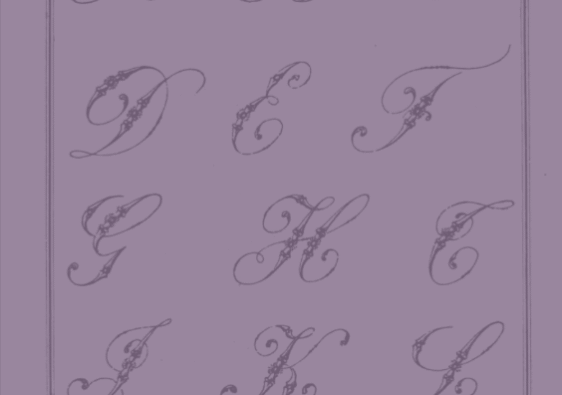
As a genealogist, I’ve used handwriting to solve two-hundred-year-old mysteries and untangle cases of mistaken identity — the loops and flourishes in someone’s handwriting can do what a name alone cannot. This is different from calligraphy, the deliberately decorative lettering you might see on a hand-written invitation. Calligraphy is a practiced art form. Ordinary cursive is a personal one. Someone’s handwriting carries the unique pressure and steadiness of their hand — the small, repeated shapes a person makes throughout a document, shapes that end up being as identifying as a signature.
The shift from cursive to block printing accelerated with the dawn of the computer age. Where “penmanship” classes once took months to complete in grade school, students today get only a brief introduction to handwriting. Increased screen time means they’re accustomed to reading block letters — which means they’ve rarely been challenged to decipher messy cursive. It also means we’re less able to recognize a classmate’s handwriting on a note, or a coworker’s initials on a memo. Deciphering cursive isn’t just sleuthing, it’s learning analytical thinking.
When my own children can’t read my precise, carefully formed cursive, it makes me a little sad. But my ability to write, and to read (even eighteenth-century handwriting) feels less like an obsolete skill and more like a superpower.
FEATURED IMAGE: “Illustration of a hand writing or signing a document with a quill by candlelight,” CoPilot AI, 2026.