 Vanessa Wood
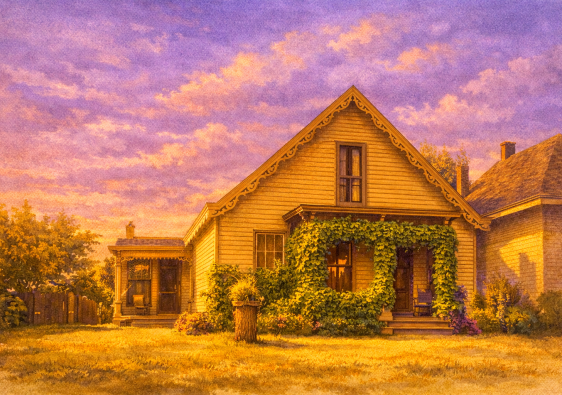
Museums, archives, and historical societies don’t magically fill with documents and artifacts — they rely on people like you and me to bring them in. I recently donated photographs to the Boone County Historical Society in Indiana. This was not my first donation to an archive, and I’ve learned a few things worth sharing with anyone considering a similar donation.
1. Ask Before You Donate
Not every repository wants every item. Before showing up with a box of photographs or documents, contact the archive, museum, or historical society directly and ask whether they’re interested in the specific item(s) you have. A repository focused on a particular county, family, or subject may not have room — literally or institutionally — for material outside their collecting scope. A quick email or phone call saves everyone time, and it also opens the door to a conversation about what they’d need from you to process the donation properly.
2. Accurately Describe the Item(s)
When you do reach out, come prepared with a clear, accurate description of what you’re offering: what it is, its approximate date, its condition, and — if you know it — who it depicts or who created it. A repository can better evaluate a donation, and a future researcher can better understand it, when the description is specific rather than vague.
3. Provide Provenance
Provenance — the history of where an item came from and how it passed through hands over time — matters more than most people realize. A repository benefits from knowing this history, and so does anyone who later encounters the item in their collection and wants to understand its journey before arriving there.
4. Get a Record for Tax Purposes
If you paid for the item — through an estate sale, an online auction, an antique shop — it’s entirely appropriate to ask the repository for a record acknowledging the donation, which you can use to claim a tax deduction. For anything beyond a nominal value, you may also want a professional appraisal, particularly for larger or more valuable donations. Repositories are generally used to this request and can guide you through what documentation they typically provide.
5. Let Your Family Know
Tell your family members about your intentions before — or at least around the time — you donate. Most will be glad to hear that a family photograph or document is going to a prestigious organization where it will be preserved and made accessible, rather than sitting in a drawer. This is also a good opportunity to photograph the items yourself and create a small album documenting what was donated, where it went, and any story you’d like to pass along. Digital photos can go into a photobook through any of the dozens of online photobook services available today, then shared with a multitude of family members. What a great gift!
Leaving a Breadcrumb Trail
Every donation like this leaves a breadcrumb trail for the researchers who come after us. A photograph without an archive is just an image; a photograph with a donation record, a provenance note, and an accurate description becomes a small, findable piece of the historical record — a clue that a future genealogist, historian, or curious descendant might follow. Documenting the donation itself — not just the item — is part of what makes that trail worth following.
Finding a Good Home
Historical societies, archives, and museums are, in the best sense, good homes for the things we can’t keep forever ourselves. They offer secure storage, professional care, and — most importantly — the intention to retain these items for people who haven’t been born yet. Donating isn’t giving something away so much as it is placing it somewhere it can outlast us, be found, and mean something to someone we’ll never meet.
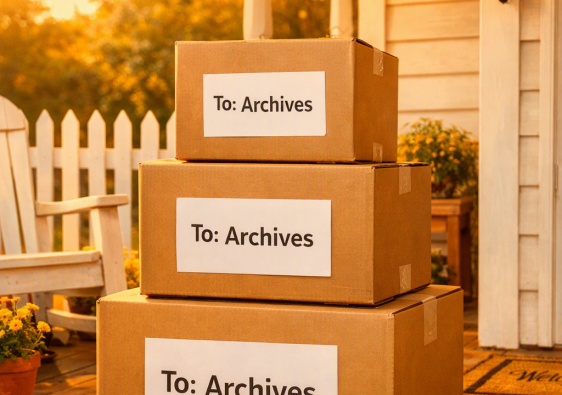
Donating a specific item, like the Parr photographs, is one part of the picture. The other part is making sure the rest of your research — the boxes, the notes, the family trees you’ve built over years — has a plan too, whether or not you’re the one who ends up handling it.
FEATURED IMAGE: Vanessa Wood, “Letter to Historical Society,” Photograph, 2026.