
 Vanessa Wood
When I acquired two photographs associated with New Castle, Indiana I asked, “Are these one man or two?” Clothing analysis and photographic evidence offer clues — but both men remain unidentified. Here are the steps taken so far toward identification.
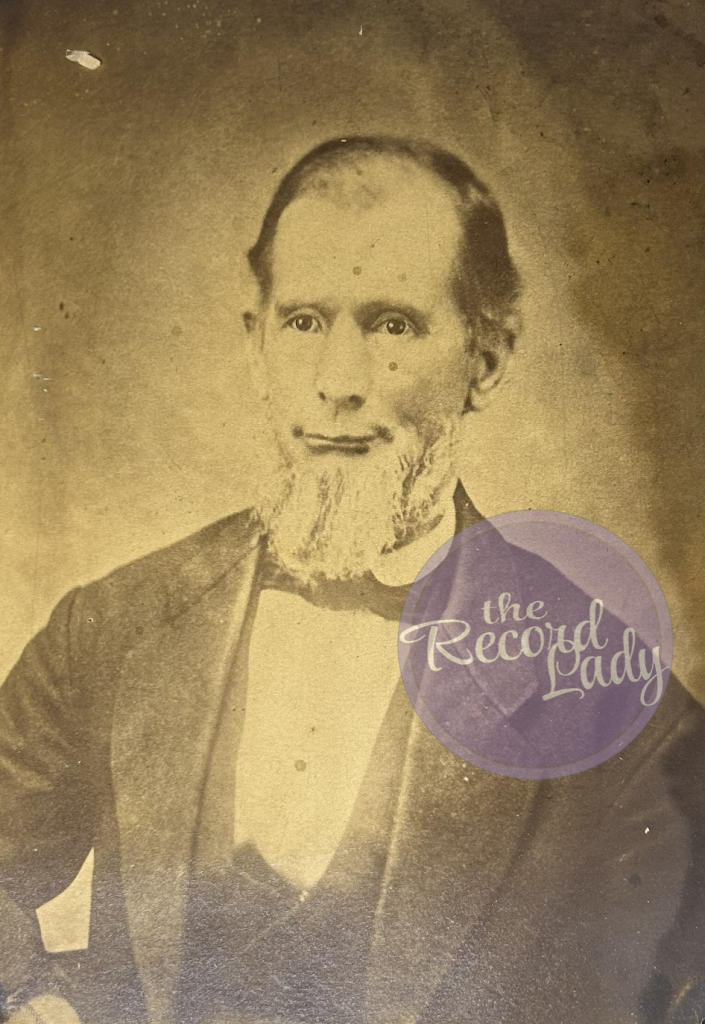
Figure 1
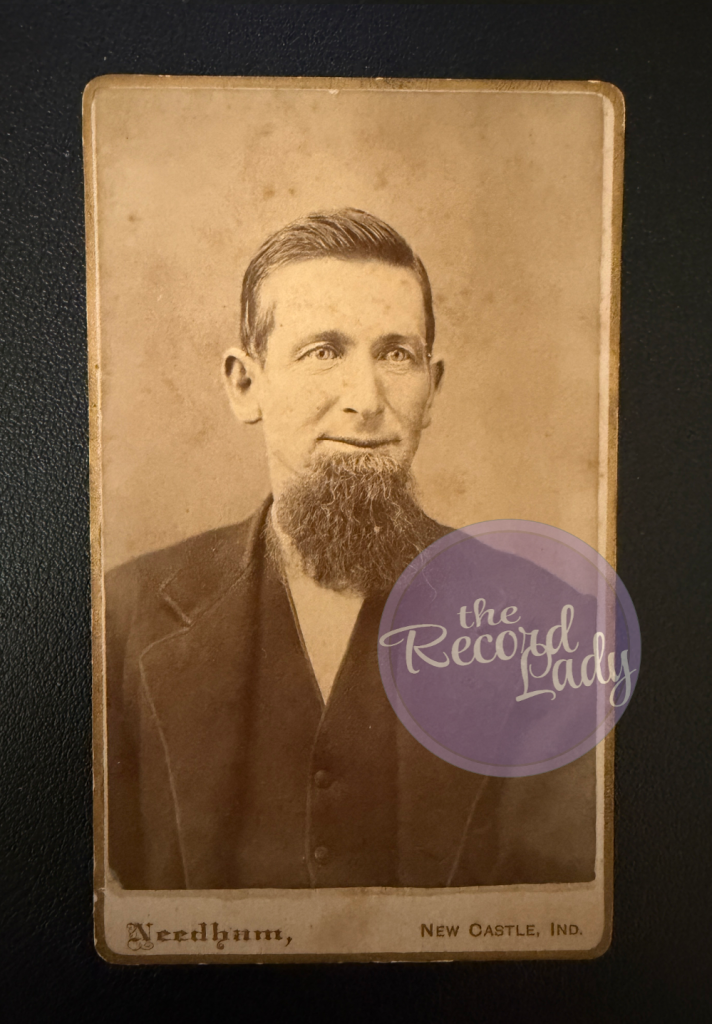
Figure 2
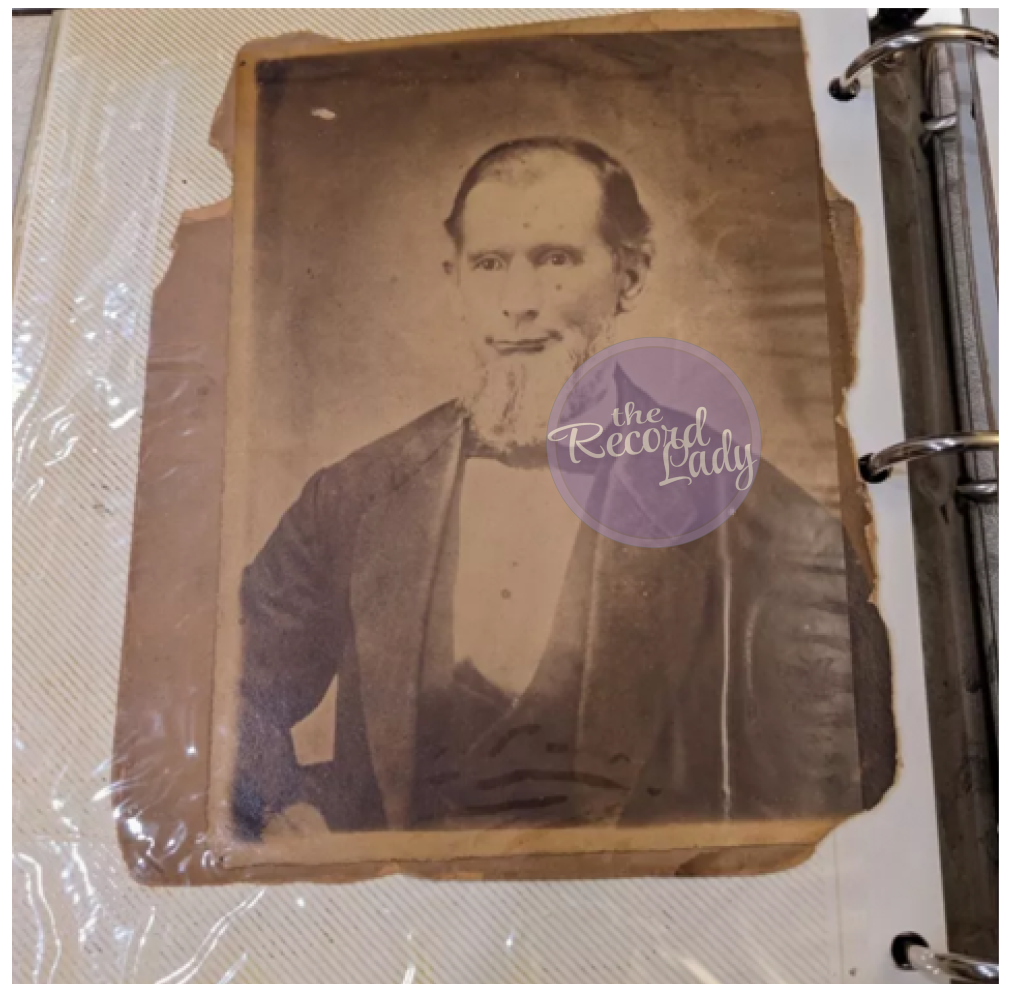
Figure 3
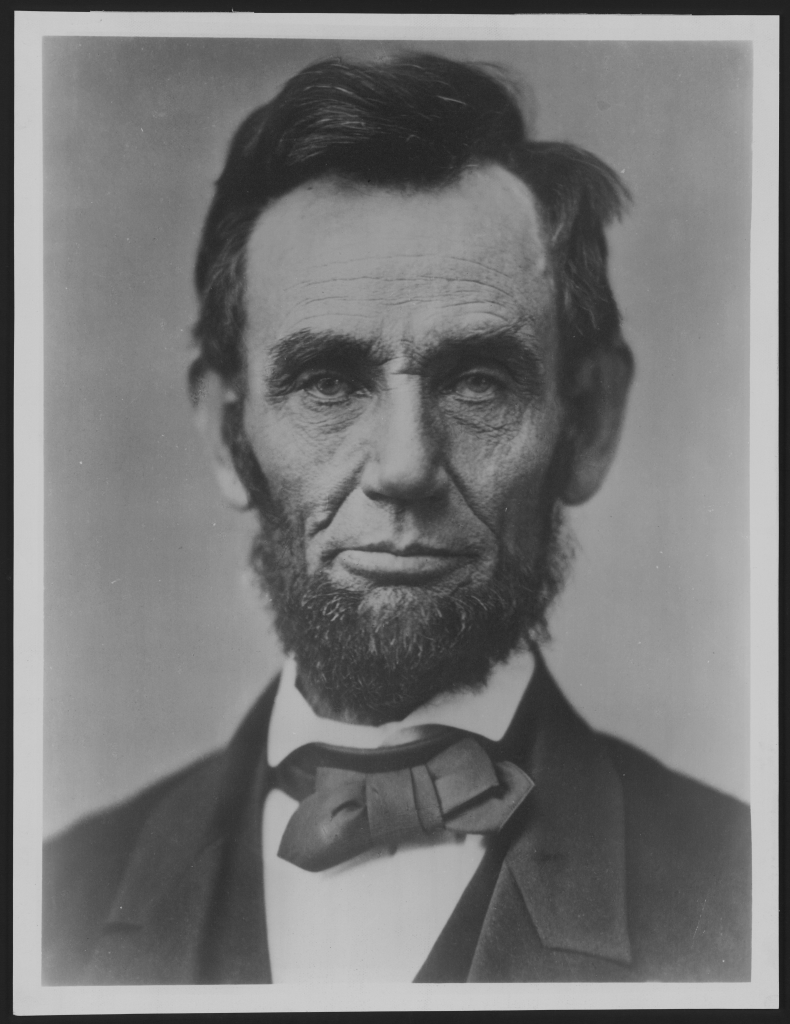
Figure 4: President Abraham Lincoln1
The Older Man, The Older Photograph
The first photograph (see Figure 1) was included in an album I purchased on eBay. It is roughly 8×10 inches and mounted on cardboard. The borders are incomplete (missing pieces) likely due to deterioration with age. It was in a magnetic photograph album, one of those albums with sticky cardboard and plastic protective sheets–that tend to accelerate deterioration (see Figure 3). When the photograph was removed to be stored in an archival box, no writing on the front or back was noted. The photograph was not positioned in the album near family photos that would suggest his relationship to other family members who ranged from settlers of Henry County, Indiana (ca 1820s-1830s) to descendant photographs from the 1960s.
There is no identifiable background. Studio photographers in the mid-1800s onward used painted backdrops, scenes that can help to identify the photographer and the time period. They often used props, such as unique chairs that appear in multiple portraits.
His clothing is the most recognizable clue used to dating the photograph. He is wearing clothing typical of the 1860s or earlier. His shirt collar is small. He is wearing a bow tie that fits under the collar. Unlike modern bow ties that prominently display the bow over the collar, the length of his tie wrapped around his neck is visible. He is wearing a vest which buttons across the button line of the shirt. This is a detail seen in Civil War era men’s clothing. Costuming for Civil War reenactors is available online and they show the same collar, bow tie, and vest details (see costume). The same style of clothing was captured in a photograph of Abraham Lincoln created in the 1860s (see Figure 4).
The subject’s white or thinning hair and white beard hints at a man in his late forties or in his fifties. So if the original photograph was taken about 1860, the the man was born perhaps in 1815 or earlier.
The Man in Figure 2: The Eyes Are Different
I purchased the second photograph on eBay during the time I was comparing photographs made by Wintford “Wint” Needham, a New Castle, Indiana photographer (see Figure 2). The photograph is a carte de visite, a small, roughly 2×3 inches photograph on a printing card. The photographer’s name in clearly printed on the front of the card. The subject’s clothing style does not harken to the Civil War era–no tie, leather or cloth covered buttons on the vest, a simpler cut to the neckline of the vest, and perhaps a collar-less shirt.
The man in the photograph has fine lines around his eyes showing his entrance into middle age. Perhaps due to aging, his eyelids droop. There is either a reflection or more likely white hair in his beard directly under his lower lip. His eyes are clear and light which are a distinguishing feature to determine this is not the same man as in Figure 1 who had very dark eyes.
A Note On the Album
I’m working on an article about a photograph from the same album that’s been identified as a woman born in the first decade of the 1800s. She died shortly before 1860. The photograph is printed on a carte de visite printing card. Close examination shows crazing (cracks)–they type of cracks one would see on an aging tin type photograph. The crazing is part of the photograph that suggests the photographer probably took a photograph of an older photo to preserve it for the family or perhaps to share it among family members. While the photograph in Figure 1 appears to be a cabinet photograph from a later year, the subject’s clothes suggest it was made earlier. If the family made a reproduction once, they may have done this twice. My thought is that is was a larger print of a family patriarch that possibly was framed and hung on a wall in a descendant’s home.
Concluding Thoughts
The photographs were examined in reverse imaging programs, but unfortunately they have not been identified. The evidence suggests they were two different men. Can you identify them?
FEATURED IMAGE: “old fashioned photographer’s storefront studio,” illustration, CoPilot AI, 2026.
FIGURES 1 and 2: Photographs from the author’s collection.